In the world of home brewing, the quality of your coffee is only as good as what goes into and through your machine — and that includes the often overlooked replacement filter. Whether you’re brewing a full carafe for the morning routine or a delicate pour-over for one, choosing the right filter can make a meaningful difference in clarity, taste, and consistency. This guide walks you through three of the most commonly encountered filter types in the realm of drip and cone-style coffee makers: the #4 cone filter (for 8–12 cup brewers), the #02 cone filter (for 2–4 cup or single-serve pour-overs), and the standard filter basket style for 10–12 cup machines.
For each filter type, you’ll find technical details (materials, dimensions, and recommended lifespan), key performance features, third-party or aftermarket options, and practical advice on when—and how often—to replace them. Whether you’re maintaining a household drip brewer or a pour-over setup, this overview will help you understand what to look for in a quality replacement filter and keep your coffee tasting fresh. Let’s dig into the details, starting with the #4 cone filters.
#4 Cone Coffee Filters for 8–12 Cup Coffee Makers
Technical Details
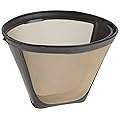
Material: Typical filters are made from bleached or unbleached paper (natural fiber) or high-grade polyester / reusable metal mesh. High-end versions may have extra micro-pores or fine mesh layers.
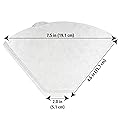
Dimensions: The #4 cone generally has a base diameter around 2.75 inch (≈70 mm) and a top opening diameter near 4.5 inch (≈115 mm), with a height of about 5–5.5 inch (≈125–140 mm).
Lifespan / Usage: For disposable paper, it’s single-use. Reusable versions (metal or nylon) can last 6–24 months depending on usage and how carefully cleaned.
Important Features
A fine but permeable micro-pore structure to trap fine grounds while letting oils flow.
Good structural stiffness — resists collapsing or clogging even when wet.
If reusable: corrosion- or rust-proof materials (stainless steel, food-grade nylon) with fine mesh to avoid over-extraction or channeling.
Compatibility with the brewer’s funnel shape — it should fit snugly without gaps.
Third-Party Filter Options
Brands like Melitta, Bunn, and Cuisinart offer #4 cone replacement filters.
Aftermarket brands like “Fltpry”, “ARKWORK” (metal reusable cone filters) provide alternatives.
Generic unbleached paper filters (e.g. 100 µm or 80 µm pore size) are widely available on retail marketplaces.
When to Replace
Paper filters: replace every brew (i.e. one-time use).
Reusable filters: rinse immediately after each use; deep-clean (soak in mild citric or vinegar solution) weekly. If mesh starts to fray, clog persistently, or develop stains/odors that can’t be cleaned, replace (typically every 6–24 months, depending on volume).
Watch for slower flow or off-flavors, which may signal pore clogging or breakdown.

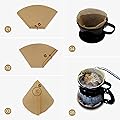
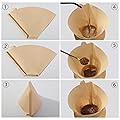
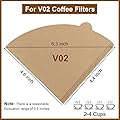
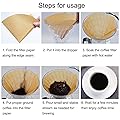
Size 02 Cone Filters, 2-4 Cup, For Pour Over and Drip Coffee Maker
Technical Details
Material: Often paper (unbleached or bleached), or reusable versions in stainless steel or nylon mesh.
Dimensions: The #02 cone filter typically has a base diameter ~2 inch (≈50 mm) and a top opening ~3.5 inch (≈90 mm), with a height of about 4–4.5 inch (≈100–115 mm).
Lifespan / Usage: Disposable filters are single-use. Reusable ones may last 1–2 years depending on care.
Important Features
Fine micro-pore paper to trap fines but allow proper extraction velocity.
Good wet-form stability so the filter doesn’t fold or collapse inward during pouring.
For reusable ones: mesh size should be sufficiently fine but not overly restrictive; durable frame to resist warping.
Fits snugly inside the brewer’s cone chamber, making full contact with sides to avoid channeling.
Third-Party Filter Options
Brands such as Hario, Kalita, Melitta provide #02 cone filters.
Aftermarket or third-party filters are available (e.g. from generic “barista’s choice” lines).
Reusable stainless-steel cone filters (e.g. Kouzi, CoffeeSock) or nylon alternatives.
When to Replace
Paper: use once.
Reusable: rinse after each use; periodically soak and scrub gently. Replace when mesh shows damage, clogs persist, or extraction is uneven (typically after 12–24 months).
If you notice slower pours, clogging, or odd flavors, it’s time to inspect or replace.
Coffee Maker Filter Basket 10-12 Cup
Technical Details
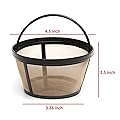
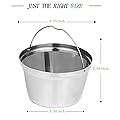
Material: Usually disposable paper (bleached/unbleached) or permanent filters in gold-tone or stainless steel. Some are also made of durable nylon.
Dimensions: The standard 10–12 cup basket is roughly 8.5 to 9 inch (≈215–230 mm) wide at the top, tapering to about 2.5–3 inch (≈65–75 mm) at the bottom, with a depth of ~1.75 to 2 inch (≈45–50 mm).
Lifespan / Usage: Paper filters are one-time use. Permanent baskets can last many years (5–10 years or more) if not abused.
Important Features
Adequate pore size to trap fine grounds but not obstruct flow.
Good structural rigidity so the basket doesn’t collapse or tilt inside the brew chamber.
For gold or metal baskets: corrosion resistance, good mesh consistency, ease of cleaning.
Compatibility with drip brewer machines: correct shape, holes evenly distributed for uniform extraction.
Third-Party Filter Options
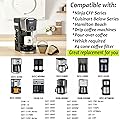
Many coffee maker brands (Mr. Coffee, Hamilton Beach, Braun) offer replacement baskets.
Aftermarket permanent “gold-tone” or stainless-steel baskets are widely sold under generic or specialty brands (e.g. iCoffee, GoldTone filter baskets).
Universal basket filters (with standard dimensions) also exist.
When to Replace
Paper: discard after one brew.
Permanent baskets: rinse after each use; periodically soak in warm soapy water or vinegar solution. Replace when mesh warps, holes widen, or extraction becomes uneven (often after 5–10 years depending on frequency and care).
If you notice grounds in your brew, slow drainage, or corrosion/spots you can’t clean, it’s time to switch.
Choosing the right replacement filter is key to maintaining the taste, clarity, and consistency of your brewed coffee. Whether you’re using a #4 cone, #02 cone, or full-size 10–12 cup basket, understanding the materials, dimensions, pore structure, and ideal replacement intervals empowers you to make informed decisions. Remember: paper filters are disposable, reusable filters require proper cleaning and occasional replacement, and performance decline is your cue to swap them out. With the right filter for your brewer and timely replacements, you’ll keep your coffee tasting fresh and your brewing routine hassle-free.