When operating a fryer—whether in a busy kitchen or a home setup—maintaining oil quality is paramount. Over time, food particles, carbonized bits, and free fatty acids accumulate, degrading flavor and shortening oil life. Using the right replacement oil filter options can extend oil usability, reduce off-taste, and lower costs. In this guide, we explore three principal filter types: the 10″ Fryer Oil Filter Paper Cone, the Oil Filter Envelope Paper, the Fryer Filter Bag. For each, we’ll present technical details (material, dimensions, compatibility), lifespan & replacement guidelines, key features, and third-party alternatives to consider. We’ll also advise on when it’s time to swap filters to protect oil quality and maintain efficient frying. Whether you run a commercial fryer or premium home fryer, selecting the right filter style ensures cleaner oil, better fried results, and cost savings over time.
10″ Fryer Oil Filter Paper Cone
Technical Details
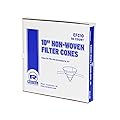
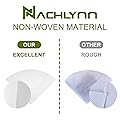
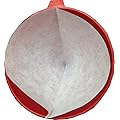
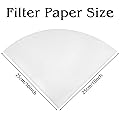
This cone style filter is made of high-strength, non-woven synthetic or cellulose blend filter media (often non-woven paper rated ~ 70 micron) that resists tearing under warm oil flow. It is typically formed into a 10-inch diameter cone (measured across the rim) with a central bottom outlet hole. Many cones use over-lock stitching around edges to reinforce structure. It is compatible with standard 10″ cone holders used in many commercial fryers. For example, the Fryclone 10″ fryer oil cone filter (50-pack) is rated ~ 70 micron and suits standard 10″ holders.
Lifespan & Replacement
This is a single-use filter: once oil has been drawn through it, particles will clog the media. Replace it every filtration cycle (i.e. after each batch of oil filtering). Reuse is not recommended because clogging and oil saturation degrade performance and risk tearing.
Important Features
- High flow rate while capturing fine suspended particles
- Easy to drop into cone holder and seal
- Helps reduce sediment and extend oil life
- Edge stitching adds mechanical durability
- Relatively low cost per unit
Third-Party Alternatives
Many commercial suppliers (e.g. Scrubble, Fryclone) provide 10″ filter cones with equivalent micron ratings and stitching. :contentReference[oaicite:1]{index=1} When selecting, verify micron rating, media strength, and that it properly fits your cone holder.
When to Replace
Replace immediately after each oil filtration run. Do not attempt multiple uses. If oil flow slows to a crawl, or if the cone shows signs of sagging, tearing, or soaking through, discard and use a fresh one.
Oil Filter Envelope Paper
Technical Details
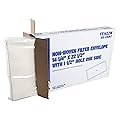
Envelope filter paper is a flat, folded “bag” of non-woven filter media (often cellulose or synthetic blends) with a drainage hole (e.g. 1.5 in / 38 mm) to allow oil to pass through after sediment is trapped. A common size is 13″ × 20″ for commercial applications. :contentReference[oaicite:2]{index=2} These envelopes are designed to drop into a filtration tray or holder so oil drains through the folded media.
Lifespan & Replacement
These are also single-use. After one filtration pass, the media is largely saturated with solids and cannot be reused. Replace after each filtering session.
Important Features
- Large surface area via folds helps reduce clogging
- Uniform particle capture across the envelope
- Relatively easy to install in enclosed filter trays
- Often compostable or biodegradable depending on material choice
- Compatible with many fryer line filter stations
Third-Party Alternatives
Many vendors supply fryer filter envelopes in sizes suitable for major fryer brands (Pitco, Dean, Henny Penny). :contentReference[oaicite:3]{index=3} When sourcing, ensure correct envelope size, hole diameter, and that the paper isn’t too coarse or too fine for your fryer’s flow rate.
When to Replace
Replace after every filtration pass. If oil drains slowly or the envelope media becomes saturated or tears, it’s no longer effective and must be discarded.



Fryer Filter Bag
Technical Details
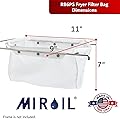
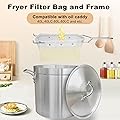
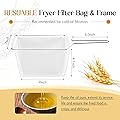
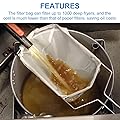
Fryer filter bags are typically made of non-woven or fine fabric (like polyester or nylon blends) with a bag shape that fits over or inside a filtration housing. The bag may have a drawstring or snap fit. Dimensions depend on fryer model (e.g. 12″ × 24″ bag, or custom sizes). These bags act as “polishing” filters, catching residual fine solids after coarse filtration.
Lifespan & Replacement
Some filter bags can be reused a limited number of times (often 5–10 uses) if cleaned gently and air-dried. However, for food safety and quality, many kitchens treat them as quasi-disposables. Once clogging is severe or fabric is stressed, replace.
Important Features
- Polishes oil after primary filtration to improve clarity
- Flexible and adaptable to varied housings
- Some models are washable, stretching service life
- Helps trap micro fines that paper filters let through
- Lower cost alternative to rigid media filters
Third-Party Alternatives
Several commercial filtering systems offer compatible mesh or fabric bags for their units (e.g. stainless basket liners, nylon filter bags). When selecting, check mesh size, bag dimensions, and ease of removal/installation.
When to Replace
Replace when the bag shows signs of excessive staining, holes, thinning fabric, or significantly reduced flow. Even if washable, once performance drops or contaminants accumulate, switch to new.
Maintaining effective fryer filtration is critical to preserving oil quality and food flavor. Use the style suited to your fryer system—cones, envelopes, or polishing bags—and adhere to single-use or limited reuse guidelines. Monitor flow, inspect for media damage, and replace as soon as performance declines to keep your fryer running cleanly and economically.
A consistent filtration routine extends oil life, improves product quality, and reduces waste. Choose the proper filter type for your fryer, replace it at the right interval, and source reliable third-party equivalents when needed. With the right approach and maintenance, your fryer oil will remain cleaner longer, reducing costs and supporting better results in every batch of fried food.