Every water purification system starts with filtering out particles and sediments. Whether it’s rust flakes, sand, silt, algae particles or other debris, untreated hose water can damage delicate seedlings, clog drip irrigation emitters, stain foliage, and reduce the effectiveness of fertilizers. That’s where garden hose sediment filters come in.
Choosing the right garden hose filter is about matching the filter type, mesh size, and deployment style to your specific gardening setup and water quality. Different soils, municipal water vs. well water, older piping systems, or long hose runs will all affect what kind of filtering you actually need. Other considerations include how easy it is to clean or replace filter elements, how much flow you can tolerate, and whether the filter adds a lot of extra hose bulk or connectors.
In this post, we’ve grouped the most popular garden hose sediment filters and replacement parts into sections to help you quickly identify what fits your needs:
- In-line sediment filter for garden hose — for overall protection between your source and hose.
- Garden hose screen filter replacement — when a simple screen is enough, and needs periodic changing.
- Mesh in-line strainer replacement — a finer mesh for more sensitive applications.
- Spin-down garden hose sediment filter — for heavy-sediment locations, or when you want to flush out debris easily.
- Strainer replacement for spin-down filter — keeping the spin-down system performing at its best.
In-line sediment filter for garden hose
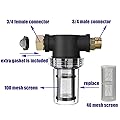
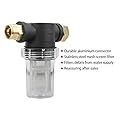
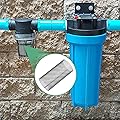
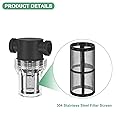
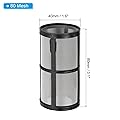
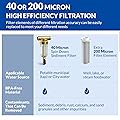
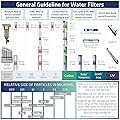
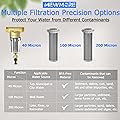
sediment filter is like a first line of defence against debris, sediment, and particles from water as it flows through a garden hose. It protects sensitive stuff like nozzles from larger sediment particles like sand or grit and ensures cleaner water for gardening. A noticeable drop in water pressure often indicates that the filter is clogged with sediment and needs to be replaced. The sediment filter entry point usually has a strainer or screen filter and a mesh filter is provided in the sediment filter housing. The standard sizes for mesh filter are 40 mesh and 100 mesh. Other intermediate sizes such as 50 mesh and 80 mesh are also on the market. Use the 40 mesh if the water supply source has a lot of coarse particles. Use the 100 mesh filter to filter out finer particles.
garden hose screen filter replacement
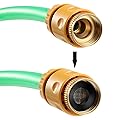
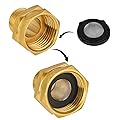
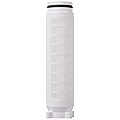
A screen filter or strainer is provided at the inlet to the garden hose for filtering out coarse particles. Depending on the condition of the water, it can be used as it is or as an entry for a sediment filter. Clean at regular intervals and replace as and when needed.
mesh in-line strainer replacement
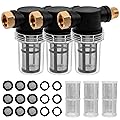
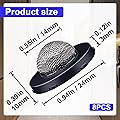
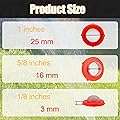
Usually, the entire sediment filter does not require replacement. Either the strainer or the mesh filter replacement should suffice, which can be ascertained by checking the condition inside the filter. The size of the replacement mesh screen depends on the size of particles found in the water supply. Use 40 mesh size for coarse particles and 100 mesh size for finer particles. If the water source is clean enough even finer screen size upto 200 mesh can be used
spin down garden hose sediment filter
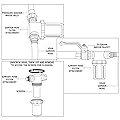
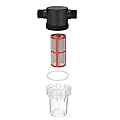
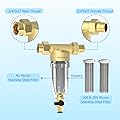
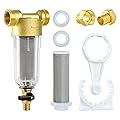
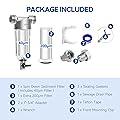
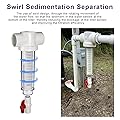
If the particle load in the water is very heavy, an in-line sediment filter wont cater to the load and will need frquent replacement. In this case, a spin down filter is more suitable. A spin-down filter uses centrifugal force to separate heavy sediment from water, pushing it to the bottom of a clear bowl for easy flushing. Spin-down filters are better for handling high sediment loads and need less frequent replacement
strainer replacement for spin down filter
Usually the strainer on a spin-down filter gets cleaned by periodically flushing it to remove accumulated sediment. If there is persisent drop in water pressure or the water smells bad, you may need to replace the strainer. Check the physical dimensions before ordering a replacement
1 comment for “Garden Hose Sediment Filters For Gardening”